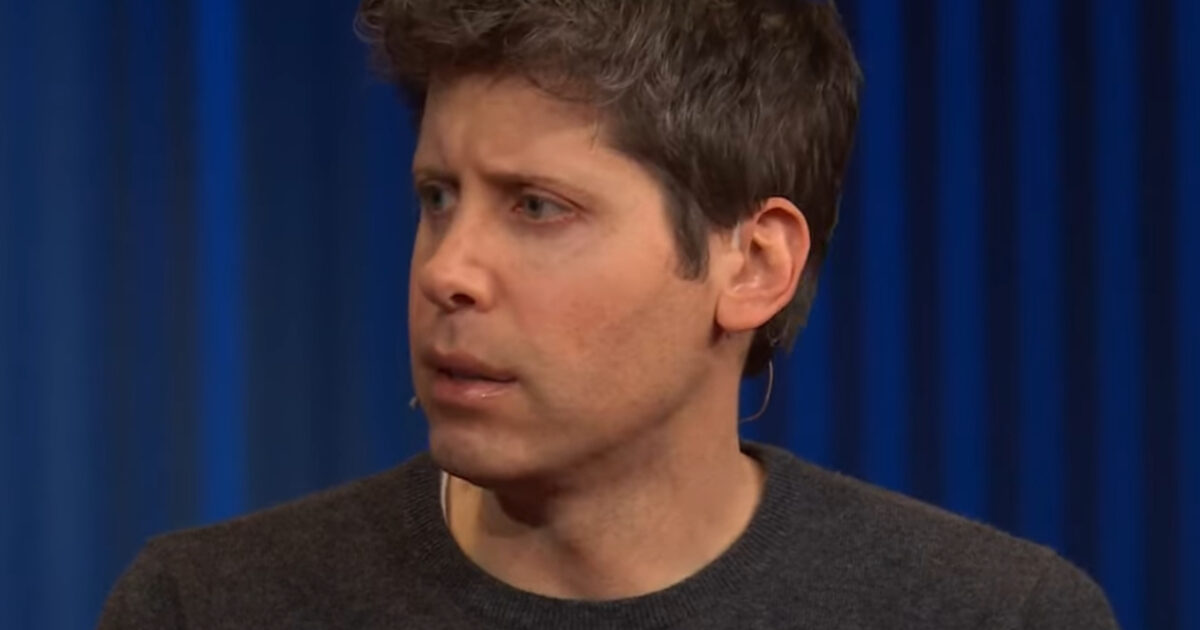
OpenAI CEO Sam Altman
OpenAI has acknowledged that employees internally discussed alerting law enforcement months before an 18-year-old transgender woman went on to commit a mass shooting in Canada.
According to a report from The Wall Street Journal, Jesse Van Rootselaar’s interactions with ChatGPT in June included detailed fantasies of gun violence over several days.
The posts were flagged by OpenAI’s automated moderation system and escalated for internal review.
Roughly a dozen employees reportedly debated whether the activity warranted contacting Canadian authorities.
Some staff members viewed the content as potentially signaling real-world harm and urged company leaders to alert law enforcement.
Unfortunately, OpenAI ultimately chose not to notify authorities.
Exclusive: Months before Jesse Van Rootselaar became the suspect in the mass shooting that devastated a rural town in British Columbia, Canada, OpenAI considered alerting law enforcement about her interactions with its ChatGPT chatbot, the company said https://t.co/sCzxy9stSw
— The Wall Street Journal (@WSJ) February 20, 2026
A company spokeswoman said Van Rootselaar’s account was banned but that the activity did not meet the threshold for reporting.
She said law enforcement would have been contacted only if the posts constituted “a credible and imminent risk of serious physical harm to others.”
On February 10th, Van Rootselaar was found dead from what authorities described as a self-inflicted injury at the scene of a mass shooting at a high school in Tumbler Ridge, British Columbia.
Eight people were killed, and at least 25 were injured. The Royal Canadian Mounted Police identified Van Rootselaar as the suspect.
She needs to sue OpenAI into oblivion https://t.co/rp12QrEm8Z
— Jack Posobiec (@JackPosobiec) February 21, 2026
OpenAI said it contacted the RCMP after learning of the attack and is now cooperating with investigators.
“Our thoughts are with everyone affected by the Tumbler Ridge tragedy,” the company said in a statement.
Investigators have since examined Van Rootselaar’s broader online footprint.
Social media archives include posts from gun ranges, references to 3D-printed ammunition components, and discussions about firearm-related content online.
Authorities have also confirmed police visited the suspect’s residence over mental-health concerns, during which his firearms were confiscated.
The case highlights the growing pressure facing major technology platforms over how to balance user privacy with public safety when evaluating potentially homicidal intent.
OpenAI insists it routes conversations that express harm to human reviewers and weighs the risk of violence against privacy concerns before contacting law enforcement.
A specialized RCMP investigative team continues reviewing Van Rootselaar’s digital history and prior interactions with law enforcement.
The post OpenAI Flagged Canadian Shooting Suspect Months Before Attack — But Didn’t Alert Authorities appeared first on The Gateway Pundit.