This weekend, Honduras held elections that garnered media attention in the United States as President Donald Trump announced “the United States’ confidence” in Nasry Asfura, whom President Trump refers to as “Tito”.
In his Truth Social post, President Trump claimed that if Asfura doesn’t win, the United States “will not be throwing good money after bad” while assuring the United States would work closely with Asfura to realize Honduras’s potential.
Asfura is leading by a slim margin of just 515 votes against Liberal Party candidate, Salvador Nasralla. Rixi Moncada of the ruling LIBRE party is trailing well behind in third place.
According to Reuters, Monday morning was full of problems with the online reporting portal as local news outlets criticized the “long stretches” of the reporting website being unavailable.
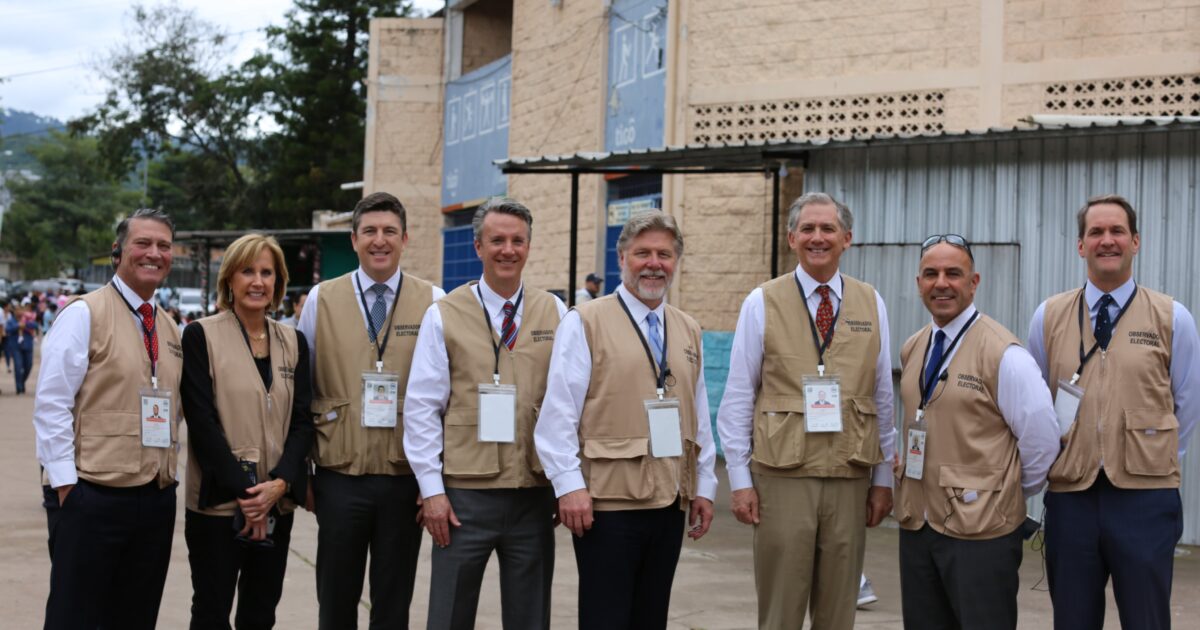
Meanwhile, a delegation of U.S. Representatives traveled to Honduras to personally “participate in observation” of their elections to “underscore the United States’ continued support for transparent, credible, and peaceful democratic processes in the region,” according to a press release from Representative Rick Crawford, the Chairman of the House Permanent Select Committee on Intelligence.
Rep. Crawford stated:
“Our delegation is committed to supporting the Honduran people as they exercise their democratic rights in a pivotal election for the country’s future. Free, fair, and transparent elections are the cornerstone of stability and good governance, and we look forward to observing this process and engaging with partners dedicated to strengthening democratic institutions throughout our shared Western Hemisphere Neighborhood.”
It was an honor to lead the first congressional delegation to Honduras to serve as official election observers in the country’s Presidential election last weekend. We were met with support and appreciation by voters at both polling locations.
The shared security of our Western… pic.twitter.com/mqrlMa15ff
— Rep. Rick Crawford (@RepRickCrawford) December 1, 2025
Rep. Crawford has also overseen elections in Guyana, Suriname, and Barbados in April 2025.
Perhaps the delegation should take notes while they observe the Honduran elections: the Central American nation does not permit mail-in voting, the use of ballot drop boxes, nor do they allow overseas voters to vote by mail. And overseas voters must vote at a consulate in person. Meanwhile, the United States is piloting cell phone voting for voters stationed and working overseas.
Honduras also requires all voting be conducted on the day of the election with no early voting, and voters must present a National Identity Card with their identity also being validated by facial recognition.
.@CannConActual Voters’ identities are verified using a biometric system at polling stations. This involves scanning fingerprints, which are cross-checked against the RNP’s database to confirm eligibility and prevent duplicate voting.
Bet you don’t hear about this… https://t.co/dnNR2Oh96O
— ColonelTowner-Watkins (@ColonelTowner) December 1, 2025
Meanwhile, many jurisdictions in the United States don’t require any ID. Voters are registered automatically just by interacting with a government agency, with numerous reports recently of illegal aliens being registered, and we have up to 60 days of early voting and mail-in voting. Also, several states still issue mail-in ballots to every registered voter, regardless of whether or not one was requested.
Why are Representatives from the Permanent Select Committee on Intelligence in a sovereign country to “observe” elections? Why wouldn’t this be reserved for members of the committees that deal with elections?
The post Delegation of U.S. Representatives From Intelligence Committee Traveled to Honduras to “Observe” Election appeared first on The Gateway Pundit.