Click Here To Listen/Watch On Spotify
The latest episode of Patriot Perspective examined a rapidly evolving situation in the Middle East, where fragile diplomacy between the United States and Iran is unfolding alongside continued military preparation.
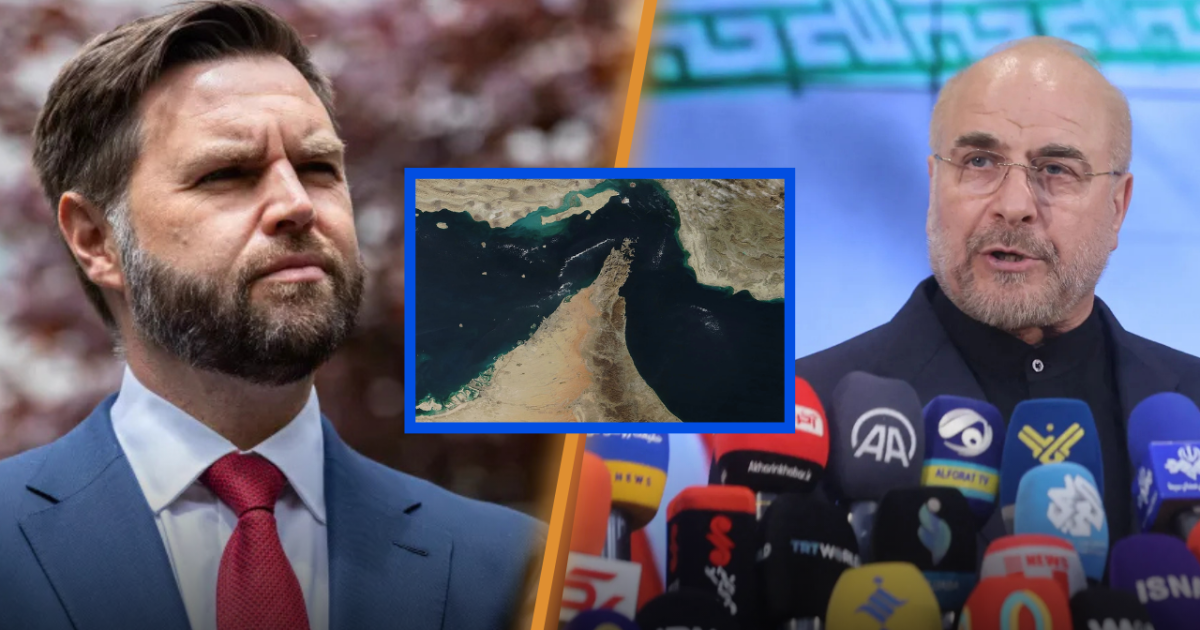
At the center of the discussion is Vice President J.D. Vance, whose arrival in Pakistan marks a significant escalation in the seriousness of ongoing negotiations.
Unlike previous rounds led primarily by envoys such as Steve Witkoff and Jared Kushner, the direct involvement of the vice president signals that the Trump administration views these talks as a potential critical turning point.
Pakistan’s role as mediator remains central. Its geographic proximity to Iran, combined with its relationships with both Washington and Tehran, positions it as one of the few countries capable of facilitating meaningful dialogue between the sides.
However, the episode emphasized that the current ceasefire should not be mistaken for stability. Iran’s agreement to reopen the Strait of Hormuz—a chokepoint responsible for a significant share of global oil transit—has been only partial in practice.
Shipping traffic remains far below pre-conflict levels, and Iranian forces continue to exert tight control over which vessels can pass. This limited compliance suggests that Tehran is preserving leverage rather than committing to a lasting resolution.
That assessment is reinforced by recent comments from J.D. Vance, who revealed that Iran has submitted multiple conflicting proposals during negotiations.
According to Vance, the first version of a 10-point framework was so unserious that U.S. officials believed it had been generated by artificial intelligence.
“The first 10-point proposal was something that was submitted, and we think, frankly, was probably written by ChatGPT,” Vance said, noting that it was quickly rejected.
A second version, developed through back-and-forth discussions involving American, Pakistani, and Iranian negotiators, was described as significantly more reasonable and aligned with positions referenced by Donald Trump.
Yet even this progress was undercut by the emergence of a third proposal, which Vance characterized as more “maximalist” than the original. The existence of these competing frameworks highlights a core problem: Iran does not appear to be negotiating from a unified or consistent position.
This lack of coherence complicates the prospects for any agreement. As discussed in the episode, Iran’s incentives remain tied to regime preservation rather than reconciliation.
The temporary easing of pressure provides an opportunity to stabilize internal political structures and reinforce leadership, rather than fundamentally alter strategic objectives.
Meanwhile, the United States is pursuing a dual-track strategy. Diplomatically, it is pushing for concrete outcomes, including full reopening of the Strait of Hormuz and limitations on uranium enrichment. Militarily, it is preparing for the possibility that negotiations collapse.
One of the most significant unresolved issues is Iran’s ballistic missile program. As highlighted in the episode, these capabilities have become central to Tehran’s deterrence strategy, allowing it to threaten regional infrastructure and global energy flows without resorting to nuclear escalation.
The absence of this issue from the core negotiation framework reflects a strategic calculation by the United States: pushing for missile concessions would likely end talks immediately.
Ultimately, the episode presents a clear conclusion. The current ceasefire is not a resolution, but a pause shaped by competing strategic interests.
Iran continues to test the limits of diplomatic engagement while attempting to maintain leverage on the ground. The United States, in turn, is balancing negotiation with preparation for renewed conflict.
Whether these talks succeed will depend less on the existence of proposals and more on whether either side is willing to make concessions that fundamentally alter the current balance.
The distinction between messaging and substance remains central to effective governance. This weekend demonstrated what happens when that distinction is ignored.
The Patriot Perspective has recently switched its main platform from YouTube, and we would greatly appreciate it if you subscribed to us there. [HERE]
Watch the video on Rumble Here:
The post JD Vance Claims Iran Sent 3 Conflicting Truce Plans, One AI-Generated (VIDEO) appeared first on The Gateway Pundit.