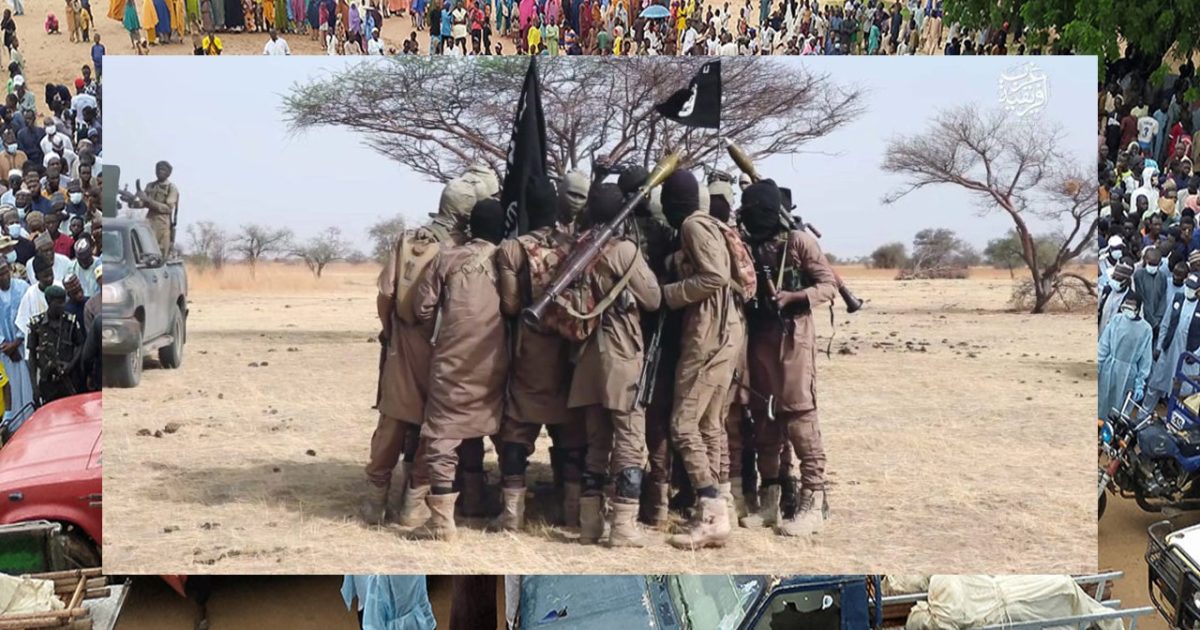
Christians in Nigeria have been killed and abducted in record numbers so far in 2026. ISWAP and Fulani jihadist militants are the most frequent culprits.
Violence against Christians in Nigeria has continued without pause through the first four months of 2026. According to Intersociety, 1,402 Christians were killed and 1,800 abducted across the country in the first 96 days of the year, from January 1 through Easter Monday, April 6.
The killing accelerated through the religious calendar: attacks struck Christian communities in Benue and Plateau states in the days around Christmas 2025 and continued into the new year without pause, with the pace intensifying sharply through Lent.
The Holy Week alone claimed 102 Christian lives between March 28 and April 4, and 34 more were killed on Easter Sunday alone. Open Doors, in its 2026 World Watch List, reported that of 4,849 Christians killed globally for their faith between October 2024 and September 2025, 3,490 (72 percent) were Nigerians, an increase from 3,100 the prior year.
Intersociety further estimates that one in ten abducted Christians does not return alive, meaning the 1,800 abductions recorded through early April represent an additional death toll still unfolding.
The final week of April brought a new wave of attacks across multiple states. In Adamawa State, ISWAP attacked the Christian community of Kubako village on April 21, killing 12 Christians and burning a church. An Islamic State social media account described the attackers as “soldiers of the Caliphate” who raided the village, targeting Christians who had refused to convert to Islam or accept dhimmi status as subjugated people under Islamic rule.
The following day, April 22, armed militants stormed the Mayo-Ladde community in Hong Local Government Area, arriving on motorcycles, opening fire on residents, and operating for hours with little resistance, killing nine people. Local vigilantes and hunters who served as first-line defense were overpowered.
On April 26, ISWAP carried out its deadliest attack of the week, striking Sangere Mapindi community in Gombi Local Government Area of Adamawa State. Militants raided a football gathering, opened fire on residents, then pursued those fleeing into the village, burning homes, motorcycles, and a church. Witnesses cited by Nigerian broadcaster TVC News reported that 28 men and one woman were killed. Eyewitness Philip Agabus said residents had gathered at a football pitch when insurgents entered and began shooting at random.
The attack lasted several hours. ISWAP claimed responsibility through the SITE Intelligence Group, stating it had killed at least 25 Christians and torched a church and nearly 100 motorcycles. Adamawa Governor Ahmadu Umaru Fintiri visited the site and confirmed at least 29 killed, describing the attack as “an affront to our humanity.” BBC Verify geolocated photos from Fintiri’s visit to Sangere Mapindi, approximately four kilometers southeast of Guyaku, where the attack was initially reported. Verified video footage showed burn damage inside the village church, including an overturned drum kit and abandoned keyboard, along with charred motorcycles outside the primary school.
The pastor of the targeted church appealed for security protection, and Fintiri’s spokesperson reported that many families had abandoned their homes out of fear of further attacks.
On the same day as the Guyaku attack, armed men raided an orphanage in north-central Nigeria and abducted 23 children. Authorities subsequently rescued 15, and the government said operations were ongoing to recover the remaining eight. No group claimed responsibility. The Nigerian government did not disclose the ages of the children, though the term used in the official statement, “pupils,” typically refers to primary school-age children up to age 12 in Nigerian usage.
Also on April 26, gunmen ambushed a vehicle carrying Christian schoolgirls traveling from Akwando village to Kachia town in Kachia Local Government Area of Kaduna State, according to International Christian Concern, citing field reporting by TruthNigeria. The attackers opened fire on the vehicle and abducted eight passengers, including six named students, Augustina Muntari, Happy Muntari, Favour Tanimu, Patience Joseph, Peace Irimiya, and Bishara Irimiya, along with the driver and one other passenger.
One student, Purity Babangida, was killed while attempting to escape. At least 15 other students fled into the bush and reached nearby communities after trekking for several hours. TruthNigeria documented at least seven separate attacks on the Akwando–Kachia road since January 2026, making the April 26 incident the first in that series to specifically target schoolchildren.
In Plateau State, coordinated overnight attacks across Bassa, Barkin Ladi, and Riyom local government areas on approximately April 19–20 killed at least eight Christians and injured ten others. In Kpasho, Kwall District, armed men ambushed four youth on a motorcycle, killing one at the scene and a second later in the hospital. Attackers then struck the Hurum Gashish NTV community in Barkin Ladi, killing four and wounding five. An International Community on Nigeria volunteer stated that security operatives present near the attack site “intentionally refused to intervene.”
Katsina State also saw multiple attacks during the same period. On April 26, bandits attacked Gurbi Village in Kankara Local Government Area, killing 11 people and injuring two before security forces arrived and the attackers fled. On April 28, heavily armed bandits invaded Unguwar Bido and Unguwar Kanawa villages in Dandume Local Government Area. Police engaged the attackers, repelled the assault, arrested one suspect, and two injured residents were taken to the hospital. Victims in the Katsina attacks have not been identified by religion in police statements.
In Zamfara State, residents of Bakkere village in Kaura Namoda Local Government Area repelled a bandit attack in the early hours of April 29 after community members detected suspicious movements and mobilized local youths and vigilante groups. Villagers from neighboring settlements moved to block escape routes, trapping the attackers and forcing their retreat through abandoned footpaths toward Jabanda village, an area locals identify as a transit route for criminal groups. No killings, abductions, or looting were recorded in Bakkere.
In a separate incident, the same day, suspected bandits raided Kucheri village in Tsafe Local Government Area, looting shops before security forces arrived and drove off the attackers. Mukhtar Yau Madobi, a research fellow at the Centre for Crisis Communication, described the Bakkere resistance as evidence that intelligence sharing, swift mobilization, and inter-community collaboration can complement formal security operations against armed groups.
The Nigerian government has disputed characterizations of the violence as a targeted campaign against Christians, citing data from the Armed Conflict Location and Event Data Project (ACLED), which recorded 1,923 attacks on civilians across Nigeria between January and November 2025, of which 50 were assessed as targeting victims specifically because of their Christian faith. However, ACLED’s methodology classifies an attack as religiously motivated only when perpetrators explicitly state a religious motive, in a claim of responsibility, a statement, or documented communications.
When ISWAP raiders burn a church, kill the congregation, and describe the victims as “Christian combatants” who refused to convert, that attack meets the threshold. But when Fulani militants attack a village that is entirely Christian, kill the residents, and burn the homes without issuing a statement, ACLED may record the event as banditry or communal violence rather than religious persecution.
Critics, including Intersociety, the United States Commission on International Religious Freedom, and various church organizations in Nigeria, argue that this coding methodology systematically undercounts faith-based targeting in contexts where perpetrators do not publicly declare their motives. President Donald Trump and other critics have argued that Nigerian authorities have failed to protect Christians from what they describe as genocide.
The post ISWAP Gunmen Kill 29 Christians in Nigeria in One of Several Attacks This Week appeared first on The Gateway Pundit.