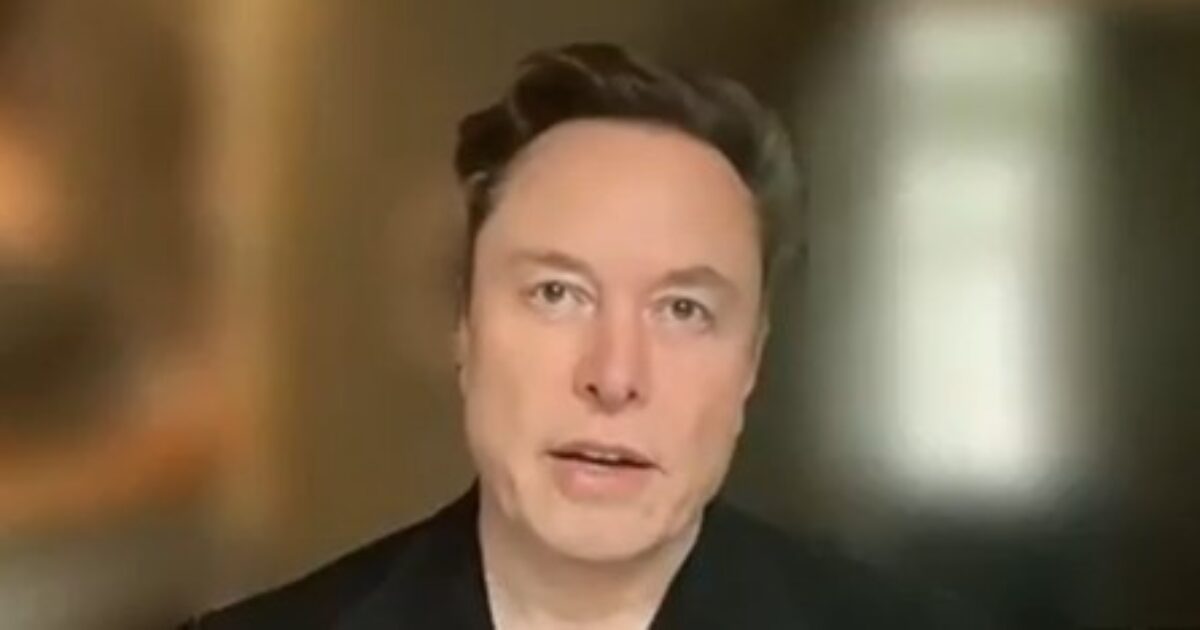
Credit: @teslaownersSV screenshot
Speaking at an international summit in Tel Aviv, tech billionaire Elon Musk made a striking claim about one of his most ambitious, and perhaps controversial, ventures. He described the work of his brain-chip company as approaching what he called “Jesus-level” technology.
The remarks, delivered at the Samson International Smart Mobility Summit, immediately drew global attention. Musk was referring to Neuralink, his company developing brain-computer interfaces (BCIs). The technology aims to connect the human brain directly to digital systems.
Elon Musk says humans will soon have cybernetic chip implants that will enable “God-like powers”, describing the chips as creating “Jesus-level [miracles].”
Follow: @AFpost pic.twitter.com/eYMJaqPULi
— AF Post (@AFpost) May 21, 2026
According to Musk, Neuralink has already enabled patients who lost brain-body function to communicate again. He suggested that restoring mobility could be next.
In clinical trials, the company has implanted devices in more than 20 patients with paralysis. These individuals can now control computers, phones, and even robotic systems using only their thoughts.
That alone, for supporters of Musk and those optimistic about this kind of technology, represents a historic leap forward, offering hope to patients with conditions long considered irreversible.
But Musk’s ambitions extend far beyond restoring lost function. He has repeatedly suggested that the technology could enhance human capabilities.
At the summit, he highlighted Neuralink’s upcoming “Blindsight” project. The system is designed to restore vision by directly stimulating the brain’s visual cortex.
Unlike traditional approaches, this method bypasses the eyes and optic nerve entirely. It sends visual data directly into the brain through implanted electrodes.
If successful, it could allow blind individuals to perceive light, shapes, and eventually more complex visual patterns. In theory, even those born blind could benefit.
Musk has gone further, suggesting the technology could eventually deliver “superhuman vision.” That claim has become a flashpoint in the broader debate. This is where the line is crossed, for detractors. The transition from healing to enhancement raises profound ethical concerns.
The timeline for Blindsight remains uncertain. As of now, human trials have not yet begun, though the company aims to conduct its first implant later this year pending approval.
The FDA has granted the project “Breakthrough Device” status. While this accelerates development, it does not guarantee safety or effectiveness.
Meanwhile, the broader brain-computer interface industry is expanding rapidly. More than 130 startups have entered the space in recent years.
Market projections suggest the sector could be worth tens of billions within the next decade. That growth has attracted investors, competitors, and global attention.
Companies such as Axoft and Merge Labs are now competing to bring similar technologies to market. Some say the pace of innovation may be outstripping the ability of regulators to keep up.
It’s worth noting that brain-computer interfaces themselves are not new. The concept dates back to the 1970s, though progress remained largely confined to research labs for decades.
What has changed is the push toward mass adoption. Companies are now openly discussing large-scale production and mainstream use. Neuralink, for example, has indicated plans to begin high-volume production as early as 2026. That timeline suggests a dramatic acceleration.
Skeptics, of which there are quite a few, warn that science may not yet justify such ambitions. Peer-reviewed data on long-term outcomes, particularly for visual implants, remains limited.
Additionally, there are practical concerns. Historically, similar technologies have produced only low-resolution results with limited real-world functionality.
Safety remains another major issue. Brain implants carry significant risks, including infection, device failure, and unknown neurological effects over time.
But beyond the technical challenges lies a deeper debate. It is not just about what the technology can do—but what it should do.
The idea of merging human cognition with machines, for many right-thinking, conservatives, raises fundamental questions. Issues of autonomy, identity, and control are central to the discussion.
Who ultimately controls the interface between mind and machine? And what happens when that boundary becomes blurred?
The benefits, however, are simply too significant to ignore for proponents of the technology. For those suffering from paralysis or blindness, the technology could be life-changing.
Yet even among those supporters, the idea of implanting chips in healthy individuals—for the sake of ‘leveling up’ like a Cyberpunk 2077 character—remains deeply controversial.
For now, the technology sits at a crossroads. It offers genuine promise while raising equally serious concerns.
The post Musk Calls Brain Chips “Jesus-Level” Tech as Neuralink Breakthroughs Advance appeared first on The Gateway Pundit.