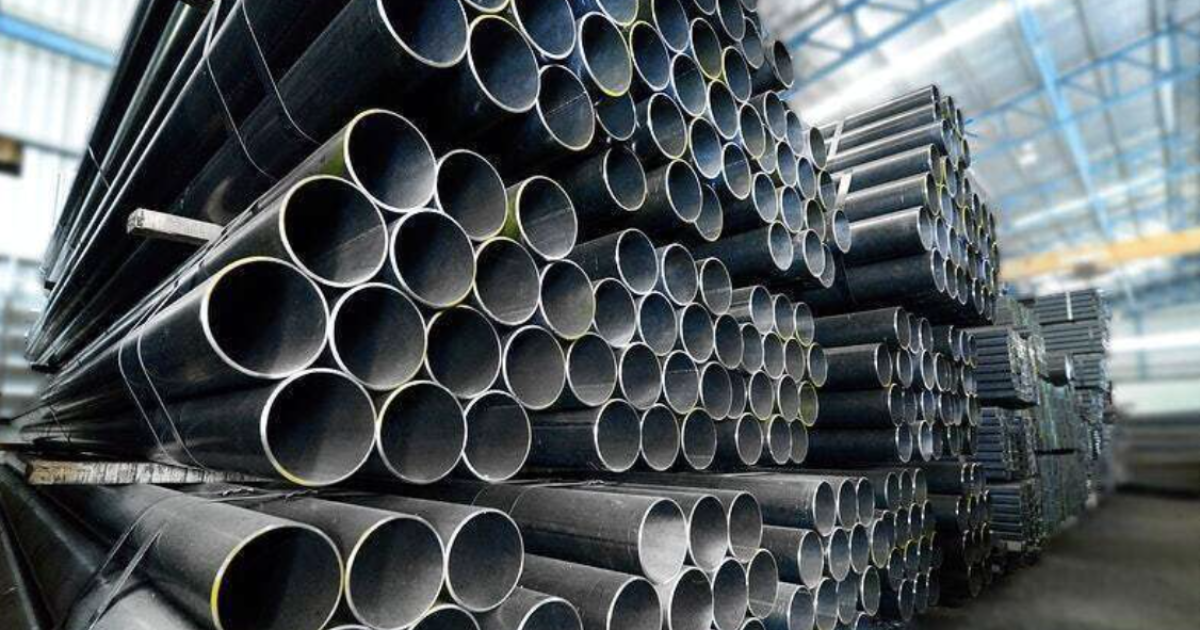
American steel via rawpixel
President Donald Trump’s tariff agenda is delivering a major win for American steelworkers, with foreign steel imports down nearly 30% so far in 2026 as domestic production rises and the country begins rebuilding the industrial muscle globalist trade policy spent decades hollowing out.
The numbers offer fresh evidence that Trump’s America First approach to trade is doing exactly what it was designed to do—protect American industry, punish unfair foreign competition, and bring production back inside the United States.
According to recent Census Bureau data compiled by the American Iron and Steel Institute, total steel imports reached 1.87 million net tons in April. That was up nearly 6 percent from March, but still far below last year’s levels.
Finished steel imports totaled 1.38 million net tons for the month. The increase came from higher imports of tin plate, metallic coatings, reinforcing bars, and other goods.
But the larger trend is quite clear. From January through April, steel imports totaled 6.97 million net tons, compared with 9.89 million net tons over the same period last year.
That is a decline of about 30%—a major shift in a market that has long been distorted by low-cost foreign steel, dumping, subsidies, and trade rules that punished American workers while rewarding multinational corporations.
The data is a direct rejection of the old free-trade consensus. The same experts who claimed tariffs would fail are now watching imports fall and American mills ramp up production.
Brandon Farris, executive vice president of the Steel Manufacturers Association, said the tariffs are “working as intended.” He noted that domestic steel production has increased by nearly 5 million tons since the start of 2025.
“That’s good for American workers, their families and their communities,” Farris said.
That is the heart of Trump’s economic nationalism. Steel is not merely a product on a balance sheet—it is paychecks, towns, skilled labor, national defense, infrastructure, and the dignity of making things in America again.
Trump reimposed and strengthened Section 232 tariffs on steel, aluminum, and derivative products shortly after returning to office. The administration described the move as a national security measure aimed at defending critical industries from low-priced foreign imports.
The president first imposed the updated tariffs on February 10, 2025. On June 3, 2025, he raised them to 50% before expanding the policy to include copper and making additional targeted adjustments.
The White House said the tariffs were needed to confront “national security threats” and “low-priced foreign imports.”
Earlier this week, Trump signed a proclamation reducing Section 232 tariffs on agricultural and industrial equipment and machinery from 25% to 15%. He also created a 10% tariff option for international companies whose products are primarily made with American steel or aluminum.
That adjustment rewards companies that build with American metals. Furthermore, it sends a clear and direct message to manufacturers: use American steel, support American production, and you will be treated differently from companies that undermine America’s industrial base.
A country that cannot produce steel cannot secure its supply chains, rebuild its infrastructure, manufacture weapons, construct ships, or remain truly sovereign. Trump’s tariffs recognize that steel production is a matter of national survival, not just commercial preference.
Domestic production is already moving in the right direction. American manufacturers processed 38.93 million net tons of raw steel from January through the end of May, according to preliminary AISI data.
That represents a 6.8% increase from the same period in 2025. During the week ending May 30 alone, raw steel production reached 1.872 million net tons.
That weekly output was up 8.8% from the same week last year, when production stood at 1.720 million net tons. Capacity utilization also climbed to 81.1% compared with 76.6 percent in the same week of 2025.
These numbers represent furnaces running, workers on shifts, plants operating, suppliers moving materials, and communities seeing signs that American industry lives.
The gains are visible across the country’s steelmaking regions. The South led production during the analyzed week with 848,000 net tons.
The Great Lakes region followed with 495,000 net tons. The Midwest produced 321,000 net tons, the Northeast recorded 137,000, and the West produced 71,000.
Average capacity utilization over the first five months of the year also improved. It rose from 76.2 percent in 2025 to 78.6 percent in 2026.
For decades now, America’s industrial towns were told to accept decline as inevitable, with factories closing, jobs vanishing, communities shattered, and globalist politicians insisting that cheaper imports were worth the destruction.
Trump’s steel policy is a direct answer to that betrayal. It says American workers do not have to lose so foreign producers can win.
US Steel, Century Aluminum, and Hyundai Steel are moving forward with plans to increase domestic steelmaking capacity. That suggests Trump’s trade policy is not merely reducing imports—it is helping create the conditions for new investment in American production.
The United States also surpassed Japan last year to become the world’s third-largest steel producer. That, for those in favor of reindustrialization, is a sign that America can climb again when DC politicians stops rigging the system against their own workers.
But the fight is far from finished. Foreign competitors are still trying to hold onto the American market.
Farris warned that some foreign steel producers are absorbing tariff costs to maintain their foothold in America. That, he said, shows why enforcement must remain strong.
“Some foreign steel producers are absorbing the tariff costs to maintain their foothold in the U.S. market, underscoring the need for continued vigilance in enforcing trade rules,” Farris said.
Morningstar analyst Seth Goldstein said disruptions from the Iran war are also forcing importers to absorb additional costs, including fuel surcharges, and rethink sourcing strategies. Those disruptions may be delaying some steel purchases.
“We could see some importers of steel and other commodities looking to maybe wait for a resolution, wait ‘til supply chains normalize, in order to not basically be buying inventory during what might be uptake pricing for the year,” Goldstein said.
But the story goes beyond temporary supply-chain disruption. The central shift is that Trump’s tariff wall has changed the incentive structure.
For years, companies were rewarded for importing cheap steel and ignoring the damage done to American workers, families, and communities. Now, companies have a reason to source domestically, invest domestically, and support the American industrial base.
That is what America First economics looks like in practice. It does not worship cheap goods at the expense of national strength.Instead, it asks whether trade policy serves American workers, American families, American towns, and American security. If it does not, Trump is willing to change it.
The White House has defended tariffs on steel, aluminum, and copper as part of a larger strategy to strengthen manufacturing, protect strategic sectors, and sustain industrial jobs. That strategy is now producing measurable results.
Trump’s model differs vastly from his predecessors: defend the market, rebuild the factory, protect the worker, and restore the nation.
The fight ahead will be fierce, as importers, lobbyists, multinational corporations, and free-trade ideologues will undoubtedly continue to push for loopholes, exemptions, and weaker tariffs.
But Trump’s message appears to be that the era of sacrificing American steelworkers for globalist trade theory is over.
The post America First Economic Nationalism at Work: US Steel Production Rises as Trump Tariffs Reduce Foreign Imports By 30% appeared first on The Gateway Pundit.